
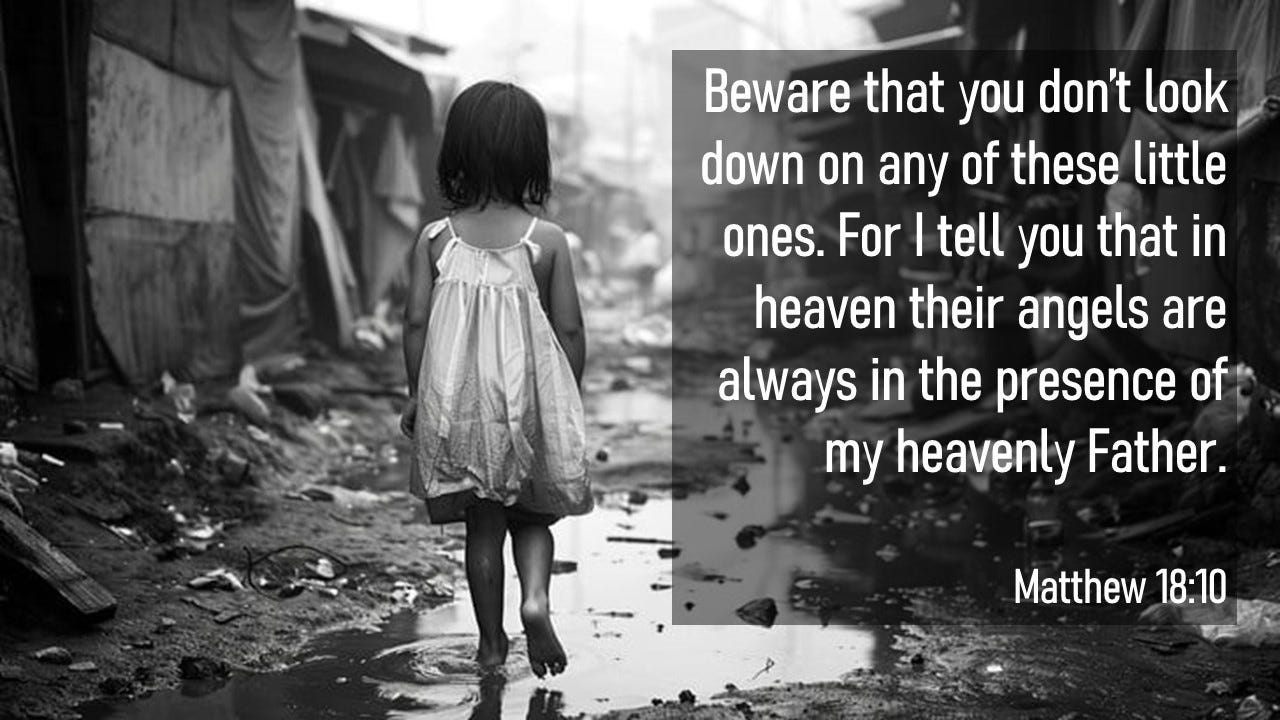
“…Tell me straight out, I call on you—answer me: imagine that you yourself are building the edifice of human destiny with the object of making people happy in the finale, of giving them peace and rest at last, but for that you must inevitably and unavoidably torture just one tiny creature, that same child who was beating her chest with her little fist, and raise your edifice on the foundation of her unrequited tears—would you agree to be the architect on such conditions? Tell me the truth.”
“No, I would not agree,” Alyosha said softly.
“And can you admit the idea that the people for whom you are building would agree to accept their happiness on the unjustified blood of a tortured child, and, having accepted it, to remain forever happy?”
“No, I cannot admit it.”
— Fyodor Dostoyevsky, The Brothers Karamazov, translated by Richard Pevear and Larissa Volokhonsky
Epstein & Maxwell
Jeffrey Epstein was an American financier and convicted sex offender involved in the exploitation and trafficking of underage girls. In 2008, he pleaded guilty in Florida state court to felony solicitation of prostitution and procuring a person under 18 for prostitution. He received an 18-month sentence in county jail but served less than 13 months, much of it under a controversial work-release arrangement. In 2019, federal prosecutors in New York charged him with sex trafficking of minors and conspiracy to commit sex trafficking of minors. He died in jail in August 2019 while awaiting trial. The New York City medical examiner ruled his death a suicide, and subsequent federal reviews reached the same conclusion. Nevertheless, his death has remained the subject of widespread public suspicion and debate, reflected in the popular online slogan “Epstein didn’t kill himself,” which has appeared on flyers, memes, and social media.
Ghislaine Maxwell, his longtime associate, was convicted in 2021 on five federal counts, including conspiracy to entice minors to travel for illegal sexual activity, conspiracy to transport minors with intent to engage in criminal sexual activity, transportation of a minor with intent to engage in criminal sexual activity, sex trafficking of a minor, and conspiracy to commit sex trafficking of minors. The jury acquitted her on one count of enticement. In June 2022, a federal judge sentenced her to 20 years in prison. She was subsequently transferred from FCI Tallahassee to the Federal Prison Camp in Bryan, Texas, where she is currently serving her sentence.
What the Files Contain
After the Epstein Files Transparency Act was signed into law in November 2025, the Justice Department expanded its online Epstein Library (guide | interface). The collection, assembled from multiple federal investigations, includes investigative documents, court records, images, recordings, flight logs, contact information, and evidence gathered in several criminal cases. By January 30, 2026, DOJ said the combined releases totaled nearly 3.5 million pages, including more than 2,000 videos and 180,000 images. Officials have redacted victim-identifying information and other legally protected or sensitive material.
Criminal judgments, charging documents, civil lawsuits, sworn testimony, and investigative records tied to Epstein and his associates describe conduct that was proved, charged, or alleged, including:
- Solicitation of prostitution and procuring a person under 18 for prostitution — Epstein pleaded guilty in 2008.
- Sex trafficking of minors — Epstein was charged in 2019; Maxwell was convicted in 2021.
- Conspiracy to commit sex trafficking of minors — Epstein was charged; Maxwell was convicted.
- Enticement of minors for illegal sexual activity — Maxwell was convicted of conspiracy but acquitted of the substantive enticement count.
- Transportation of minors for illegal sexual activity — Maxwell was convicted.
- Recruitment, grooming, sexual exploitation, and abuse of underage girls — documented in indictments, testimony, and trial evidence.
- Attempted witness tampering — alleged against Epstein during his 2019 bail proceedings.
- Perjury — Maxwell was charged, but the counts were later dismissed.
The released materials name public figures, celebrities, executives, and politicians who had contact with Epstein or were mentioned in the records. The appearance of a name does not, on its own, establish criminal conduct; due process remains essential. Survivors continue their advocacy and calls for further accountability. In a July 2025 memorandum, the DOJ and the FBI said their review had not uncovered evidence that could support an investigation into uncharged third parties. The disclosures have nevertheless intensified public and congressional scrutiny and coincided with renewed investigative activity in New Mexico.
In many ways, transparency hasn’t accelerated accountability. The release of millions of pages may satisfy public curiosity, but transparency alone does not guarantee justice. A civilization can expose evil in exhaustive detail and still fail to meaningfully confront it.
A Personal Encounter with Evil
The crimes are not equivalent, but both cases reveal how adults can be hideously wicked toward children.
The Epstein scandal resonates with me because it reminds me of my experience at JBC Scared Straight at age 12 — a military-style wilderness boot camp to which my parents sent me involuntarily.
On Saturday, May 29, 2004, before dawn, I witnessed the staff tie up four other children, drench them with water, and scream at them for at least an hour after the four had been caught trying to escape. The staff then forced them to carry a log inscribed “My Best Friend” as punishment. It was humiliation disguised as discipline.
My experience did not involve trafficking, but the staff took children from their homes with parental permission and prevented them from contacting their families. For years afterward, program administrators called my family and me in an effort to intimidate us into remaining silent and compliant.
This kind of trauma can scar a child for years — sometimes for a lifetime. The German term Seelenmord — “soul murder” — captures something of this experience. In John Gabriel Borkman, Henrik Ibsen calls it “the great, unpardonable sin” to “murder the love-life in a human soul.”
This did not happen in a distant totalitarian regime. It happened right here in the United States — in South Florida.
Naming Evil
At some point, refusing to tolerate or participate in evil becomes not only morally appropriate but urgent and necessary — especially when it involves children. Adults are responsible for ensuring their safety. Those who fail in that duty must be held accountable, and that accountability begins with precise language, not sugar‑coated euphemisms.
“What is currently annoying me the most is the use of the word abuse to describe the rape and torture and molestation of underage children. It’s not abuse. […] Looking for an easy and excusing word for rape and torture and molestation of children is itself a crime and actually abets the crime and makes it seem as if there’s no case to answer except that of sin and repentance, instead of what is really necessary now, which is law and, most important word of all… justice. So let’s have no more of that, and let’s have our press stop using this crummy word to describe this terrible situation.”
— Christopher Hitchens, “Programmatic Specificity We Can Believe In,” Sydney Writers’ Festival, 2010
We may study evil to name and oppose it, even at some cost to our sanity. But explanation is not exoneration, and understanding must never become justification.
Evil is the only word that adequately describes what Epstein did and what Maxwell was convicted of helping him do.
To disbelieve evil is to disarm ourselves against it.
Even if we cannot undo the past, we can still hold those responsible to account — especially when the victims are children.
How can a nation founded on life, liberty, and the pursuit of happiness tolerate the degradation of its own children — and still claim to honor those words?
Dostoyevsky’s question remains unanswered: what kind of civilization can claim moral legitimacy while tolerating the suffering of its children?
A society that cannot protect its children forfeits the moral authority to call itself civilized.